Hairless dogs are a little like Marmite – people either love them or just find them a bit weird! They certainly turn heads everywhere they go and you can guarantee they will be the centre of attention!
These breeds are particularly beloved for their smooth skin and low grooming needs – and may be less likely to cause allergies due to their lack of shedding.
They are however rare – and while the Chinese Crested, and increasingly the Xoloitzcuintli, are available in the UK (although you will have a long wait for puppies), the others listed below will require you to be living in a country where they can be found.
If you have fallen in love with the idea of having a hairless dog, read on to find out more about the most popular breeds:
1. Chinese Crested
If you think the Chinese Crested looks like a movie star with their elegant bodies and luscious tufts of hair on their head and legs, you'd be right!
This hairless dog has been featured in many films throughout the years including 102 Dalmatians, How to Lose a Guy in 10 Days and Cats & Dogs, just to name a few. While they are well-known for being hairless, there is also a coated variety which is called a Powder Puff.
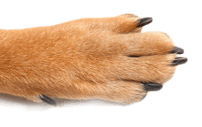
Even the hairless variety has tufts of hair on their ears, tail and feet – and are described as moving like a ‘prancing pony’.
While the breed has long divided opinion, they are a joy to live with and have a playful, happy-go-lucky personality – and, as long as you can keep them warm and are dedicated to their skin care, they are fairly low maintenance.
Fun fact: Their skin is hot to the touch which in the past gave rise to medical myths. For instance, it was once thought that arthritis could be cured by using one as a ‘heating pad’, and they were briefly given the name ‘Fever Dog’ as it was thought they could cure fevers!
2. Xoloitzcuintli (Mexican Hairless Dog)

The Xoloitzcuintli, pronounced show-low-eats-QUEENT-lee (or usually just called Xolo) is a hairless dog breed from Mexico. They can be both coated and hairless and come in three sizes: toy, miniature and standard.
While they are still a relatively unknown breed outside of their native country, they are still popular in Mexico where they are the national dog and are a cultural symbol with a history spanning more than 3000 years.
The name combines Xolotl (the Aztec god of the underworld) and itzcuintli (the Aztec word for dog), and it was believed that Xolos were sacred guides that safely led souls of the deceased to the underworld.
They are smart but independent dogs who are loyal and affectionate to their family (although aloof with strangers) but look on training as something that is very definitely beneath them.
Fun fact: In the Pixar film Coco, a Xoloitzcuintli called Dante serves as a spirit guide to Miguel the main character, helping him travel through the Land of the Dead. To make sure they got the animation of Dante right, Pixar used a real Xolo so they could copy their movement, expressions and mannerisms.
3. American Hairless Terrier

These American hairless dogs are highly intelligent, affectionate and playful and make good family pets. However, even in the US, they are considered rare – and are largely unknown and unavailable in the UK.
Fun fact: Unlike the Chinese Crested and the Xolo, the hairlessness doesn’t come as a result a lethal gene. American Hairless Terrier puppies are born with a soft coat that gradually disappears by around 8–10 weeks old.
4. Peruvian Inca Orchid
The Peruvian Inca Orchid is a sighthound from the Andes and is definitely a very unique looking hairless dog breed! Boasting a very sleek appearance, they come in a wide variety of stunning skin colours.
When it comes to their characteristics, they're known for being a little nervous at first. But when they bond, they bond for life and are fiercely loyal to their people.
Peruvian Inca Orchids are said to be super active, highly intelligent and trainable using reward-based positive training – but like all sighthounds, recall is always going to be a challenge! They are an active dog who needs an outlet for their energy, and so lure coursing or agility may suit them well.
This is another very rare breed that is likely to only be available via specialist international breeders.
Fun fact: While being a hairless dog, many have a mohawk on the top of their often-wrinkled heads – while others have little more than a tuft. The Spanish named them ‘Flower Dogs’ after finding them resting among orchids.
5. Argentine Pila
There's been much debate about the Argentine Pila and whether it's a distinct breed or just a variety of the Xoloitzcuintli or the Peruvian Inca Orchid. Much like the latter, it's thought that this hairless dog breed's roots trace back to the Incas and was gifted to Argentina in a bid to strengthen their political relationship.
The Argentine Pila comes in a variety of sizes from small right up to large and are incredibly good natured and playful. This means they can make great pets – but they are so very rare, you’re unlikely to find one as there are few (if any) outside of South America!
Caring for hairless dog breeds
Some owners may want to get a hairless dog thinking that they require far less attention on the grooming front, but this is not always true. While they do have a lot less hair to brush (if any), their skin still requires plenty of care.
Interestingly, the skin of hairless dogs needs similar care to humans and will need regular baths to keep the skin clean and free of dirt, moisturising creams to prevent dryness, and sun creams to prevent sunburn. Hairless dog breeds can even develop dog acne too!
But don't put any creams recommended for human use on your dog as these may contain chemicals which will irritate their skin or they may be toxic. Speak to the breed club in your country or else your vet for advice on the best creams to use for your hairless dog.
It's also important to note that dogs without hair are very sensitive to the cold and wet. This means you'll need to ensure that you get them a good wardrobe full of raincoats and dog coats to keep them warm and dry during walks. These need to be soft on the inside so as not to irritate the skin or cause itching.
That's our list of our top 5 hairless dog breeds! Prefer your pups a little fuzzier? Check out our article on our favourite big and fluffy dog breeds instead.
Hairless dog breeds FAQs

Purina Editorial Team
Explore our dog brands:







Related articles